I’ve been playing trading card games ever since I was a kid and Yu-Gi-Oh had just arrived in the United States. I can’t even begin to explain how big of a deal card games were in the early 2000s. Seeing kids duke it out in an impromptu sidewalk Yu-Gi-Oh match was a surprisingly common occurrence. However, nothing beats the feeling of getting up on Saturday morning and getting ready for a tournament. Saturday trading card game tournaments were really my first feeling of being connected to a wider community. I played both Yu-Gi-Oh and Magic the Gathering fairly competitively for several years (though I was always much better at Yu-Gi-Oh if we’re being honest), but it’s been a while since I’ve been connected to the competitive scene in any format. I haven’t really played any game competitively since the start of the COVID-19 pandemic, but that really has more to do with both Yu-Gi-Oh and Magic going in directions I’m not really fond of at a competitive level.
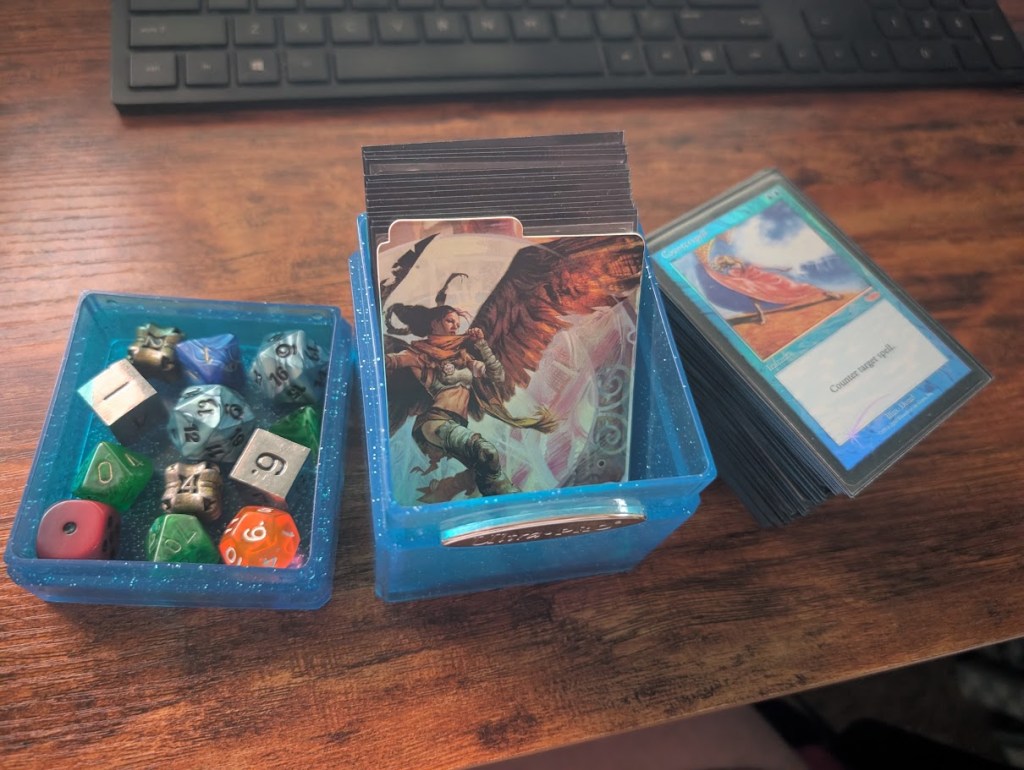
I would say this, but actually that changed last weekend. I somewhat recently discovered that Tucson has a Premodern scene for Magic the Gathering, and I thought I’d give that a try. Premodern is a retro format that is intended to showcase Magic the Gathering strategies that predate modern design strategies. Read: a lot slower, interaction is great, and creatures are WAY worse. I actually didn’t play Magic at any point that premodern cards were current (the cutoff date lands in 2003), but I greatly prefer this era of design over contemporary design, particularly for competitive play. The only other competitive Magic format that I’ve flirted with recently is competitive commander, but I’ll probably share my thoughts later about why I don’t really care for it. The funny thing is that the only premodern event that I could find online in Tucson was the monthly Crab Cup Invitational Qualifier, which is run with competitive rules and there is a pretty serious prize pool for the annual Invitational. I really didn’t think I would do well, but I figured that since I was interested in the format this was the best way to start. To my incredible surprise, I actually took second and nearly won the event. This is going to be my tournament report.
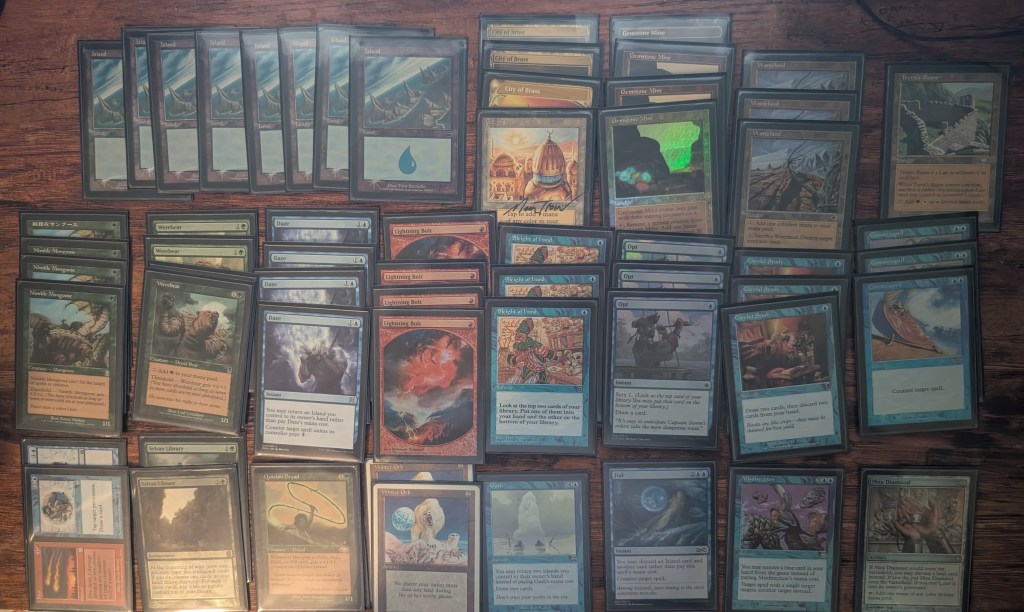
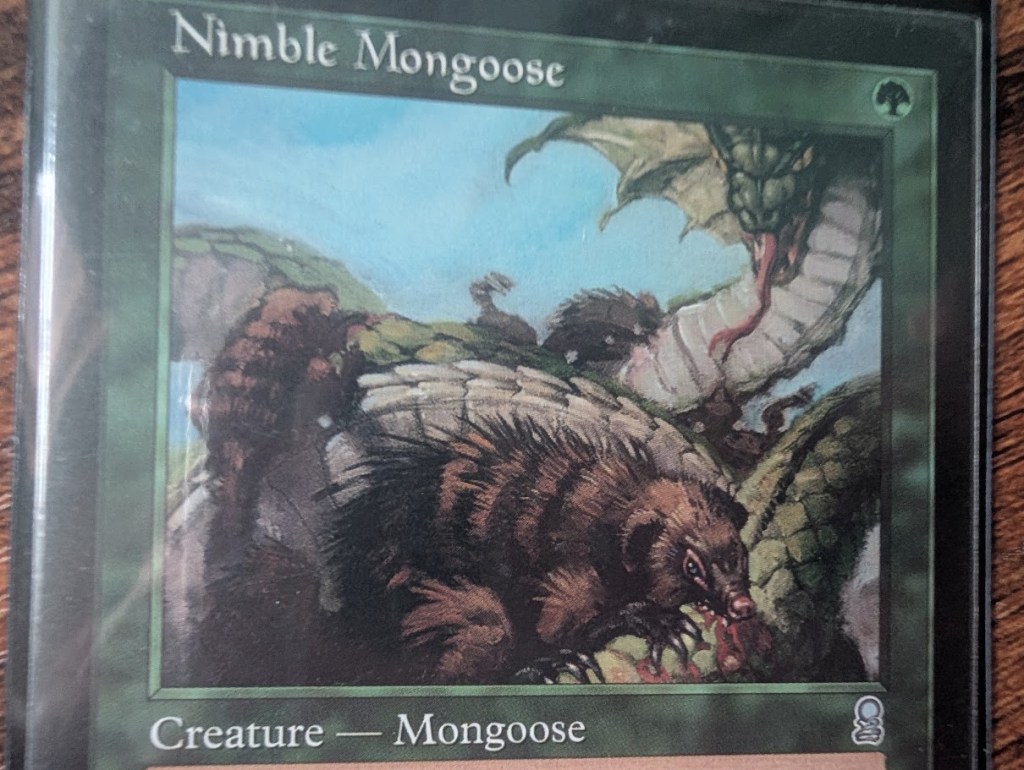
First off: the decklist. I was on Canadian Threshold, which is a tempo deck that wants to present an early threat and spend the rest of the game responding to the opponent. While this kind of strategy can look weak to newer players (I won half of my games with a mongoose; come ON), it is actually a deceptively strong strategy in formats with strong enough cheap interaction. In premodern, with cards like Daze and Foil, cheap can actually mean free. The main threats you can put up in Canadian Threshold are Nimble Mongoose and Werebear, which both start out small and grow to a respectable size once you “hit threshold,” meaning you have at least seven cards in the graveyard. This can happen naturally as the game goes on, but it is also accelerated through cards like Careful Study. The deck also plays Quirion Dryad, which grows larger the more spells you play. Because you are playing Opt and Sleight of Hand in addition to Careful Study, this can theoretically grow big fast, and is limited by your mana base primarily. On that topic, the mana base is quite greedy. Because you need cheap interaction, and the free sources of interaction in this format require basic Islands you need a critical concentration of these. However, all of the threats and a lot of the other interaction pieces require different colors of mana (especially in the sideboard), so all of the other mana sources (including one Mox Diamond) need to tap for 3-5 colors. That said, in practice, the deck avoids most of the drawbacks to cards like Gemstone Mine and City of Brass by either ending the game early enough or finding ways to play without spending mana aggressively. That’s why Winter Orb is in the deck; once you have a credible threat you can mostly just wait for your opponent to try and do something, and then you can tap your mana. While I like tempo strategies a lot, the reason I played this deck is actually because I decided to play in the event 4 days before it went down. I needed a deck I already had most of the pieces for, and the remaining pieces were at stores in town for local pickup. It turns out that it’s really hard to find 3 copies of Decree of Justice when you need them. To be honest, I didn’t love my odds with the deck. Tempo strategies are hard to play in general and require pretty deep knowledge of other decks in the format to understand the pressure points of interaction. They’re usually not recommended as a first deck in the format. Let alone that this deck is not exactly the most effective at winning events in premodern.
My first matchup was against G/R Midrange. This was not a great start for me. Midrange decks are already a pretty bad matchup for tempo decks, and this was one of the lists that I didn’t really look at too closely ahead of time, so I didn’t know all of the potential areas to interact with. Not only that, but this was also the first time I played the deck and it took some getting used to. I made one notable misplay when I cast Fire and split damage between a Quirion Ranger and opponent’s face, when I could have instead sent the other damage to Multani’s Acolyte, which would have disabled his draw engine. I also got blown out by Caller of the Claw (which I did not really know existed) and didn’t recover from that. After sideboarding, I had slightly better odds, but I realized that I didn’t have enough options to bring in. I was, however, able to pick up the second game by riding on a Cursed Totem, but I lost game three due to failing to draw lands to make the colors I needed after suboptimal mulligan decisions. Loss 1-2. Total record: 0-1.
Next up was an off-meta deck: B/W Contamination Control, which seeks to control the game by destroying opponents mana bases, thus preventing them from casting spells, and hold them there while threats like Nether Spirit close it out. Control decks that target mana bases can be quite strong in the right context, but unfortunately for opponent, this is a fantastic matchup for Canadian Threshold. As I already mentioned, the deck doesn’t need a lot of mana to operate once it has a threat down, and Nimble Mongoose is all but immune to opponent’s answers. Additionally, Sylvan Library keeps me up on card advantage. This is a really uphill climb for opponent and he wasn’t able to control the game. Win 2-0. Total record: 1-1.
Third round was against Burn, which is the most aggressive deck in the format. This is another great matchup for Canadian Threshold. There are similarly few answers for Nimble Mongoose (main one being Earthquake, which opponent did not have), and I can effectively pressure opponent’s cards with cheap interaction. In game one, Misdirection was used to redirect a damage spell on Werebear to kill her Grim Lavamancer. Burn can be scary, but eventually they run out of cards in most tempo matchups while you are still able to effectively pressure their life. It didn’t help that I was able to bring in Chill for game 2. Win 2-0. Total record: 1-1.
Next was one of the more popular meta-decks: U/W Enchantments. This deck is another midrange deck, but one that I can actually interact with more easily. While it can be strong by mixing in control elements like Parallax Wave, and it can effectively close out games with big Replenish fueled board states of enchantments animated by Opalescence, these are all expensive and vulnerable to counter-based removal. This gives you a little lead time to find a lot of counterspells through card selection. Additionally, Enchantments mostly plays at sorcery speed, which makes it highly vulnerable to Winter Orb. I liked the matchup and I took game one with the strategy outlined. Game two was actually a bit easier with the inclusion of powerful targeted interaction like Ray of Revelation. Win 2-0. Total record: 3-1.
At this point I’m making a pretty strong comeback. In fact I have enough points to safely intentionally draw (ID) with round 5 opponent into the top 8 playoffs. That’s it, we cleared the Swiss rounds. ID. Total record: 3-1-1.
My first match in top 8 was against the boogeyman of the format: Stiflenaught. This is actually the metadeck that is most similar to Canadian Threshold in my opinion. It is effectively a tempo deck that relies on Phyrexian Dreadnaught as an early threat that ends the game in two hits, and spends most of the remaining cards playing interaction. The catch is that by itself the Dreadnaught is unplayable and needs either Stifle or Vision Charm to save it from its own effect. So the crux of the game in this matchup puts it on the Stiflenaught player to play the Dreadnaught and try to defend it from my mostly counter-based interaction. If it resolves in game one, I have very few pathways to victory. That happened in this match, as I lost the counterspell war. On the whole, I think it is a slightly bad matchup in game one that dramatically improves after sideboarding. In game two, this nearly closed out the same way, but I was able to remove the Dreadnaught with a sideboarded Disenchant (AFTER taking 12 damage). Opponent was unable to stick a second Dreadnaught and I was able to win. I was able to effectively control the course of the third game, with an early Hidden Gibbons that opponent couldn’t answer and enough interaction to prevent a Dreadnaught from sticking. Opponent had not seen Hidden Gibbons before, but I imagine he will know it now. Win 2-1. Total record: 4-1-1.
My semifinals match was against Stasis, which is effectively a combo deck that uses Stasis to effectively prevent any permanents from naturally untapping after finding a way to keep enough mana to keep it alive, such as Forsaken City. At that point, Black Vise slowly wins the game for you. This is the deck that makes people fairly salty in the format, since the way it wins is pretty drawn out. I would say overall this is a pretty neutral matchup for Canadian Threshold. You need to respect the threat like Stiflenaught because if Stasis can effectively lock you out, you’re done. That said, there’s actually a few more points of interaction in this matchup and Stasis plays fewer counterspells. I was able to win game one due to opponent’s lack of knowledge of my deck. He fought hard to get a Stasis lock in place, and thinking I had no ways to remove the core pieces, thought he was set. After thinking about it for a moment, I realized that the lock was vulnerable to Wasteland to destroy Forsaken City, which I was able to draw and get the lock off. Opponent was VERY surprised I played Wasteland in an effectively five color deck, but sometimes greed is good. Opponent was effectively able to burn me out in game two with Black Vise as I couldn’t draw interaction to remove the lock. Game three ended after I was able to leverage Winter Orb to prevent opponent from untapping after a costly fight to unsuccessfully keep the lock up, which allowed me to win without much of a chance for him to come back. Overall, this was probably the most interesting match of the day in my opinion, and opponent and spectators noted the irony of using Winter Orb to beat Stasis by preventing their lands from untapping. Win 2-1. Total record: 5-1-1.
Finals was another matchup against Stiflenaught, and played out pretty similarly to the quarterfinals match. I lost game one because to be honest I didn’t fully respect the odds of an early Dreadnaught, and I was able to pick up game 2 because of Hidden Gibbons and Disenchant. When it came to game three, however, I was unable to beat out a second Dreadnaught in a counterspell fight after dealing with the first. I think the primary issue in game three was that I made poor mulligan choices, which I can chalk up to my inexperience with the deck. I had a hot streak, but it finally caught up with me. I would also acknowledge that my finals opponent played at a VERY high level and very much deserved the win. It was great playing with them. Loss 1-2. Final record: 5-2-1.
At the end of the day, I am very happy with my showing. This was a high level event and I took second in my first time playing the format. Not only that, but Premodern is LOADS of fun. This is exactly what I’ve been looking for in a competitive card game scene, and I will definitely be back.
 Dr. Josh T. L. Anderson Personal Site
Leave a comment