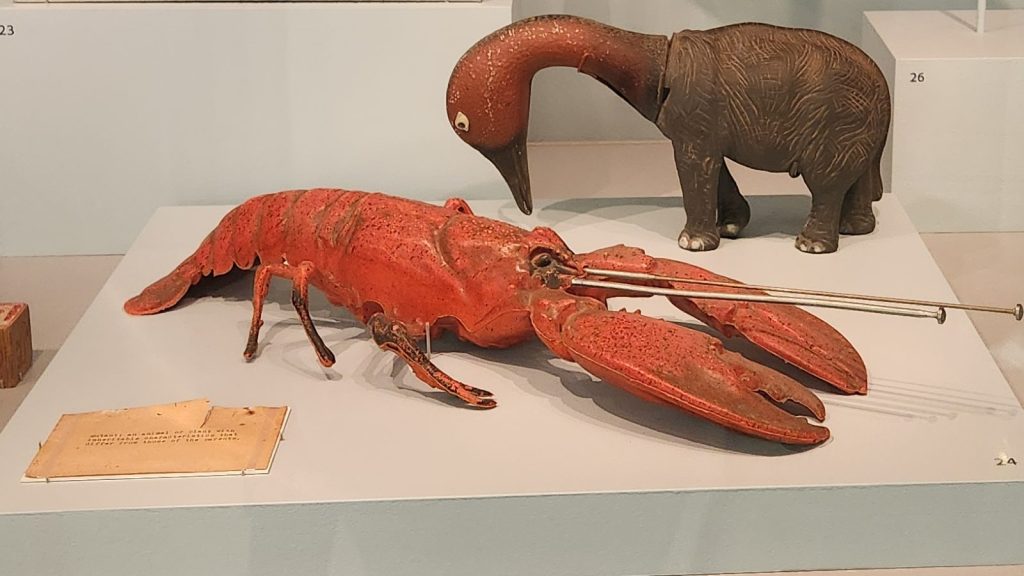
David Foster Wallace is a polarizing figure in the field of American literature. Nigh endless debates have been hashed out to determine if his writing, and in particular Infinite Jest, is actually pretentious or not. While his loss was roundly mourned, some of his legacy and his character, particularly his relationships to women, were questioned years after his death. All of this said, his skills as an essayist are more widely recognized for their strengths. His essay for Gourmet food magazine, “Consider the Lobster,” is a particularly lauded essay. It is brief and easily available, and I encourage you to read it as I don’t think I could do justice to it in my own retelling. Instead I will focus on its thesis and my response to it.
The thesis of the essay, as I understand it, is that suffering is an inherent part of the consumption of animal flesh that warrants an ethical question which weighs suffering against the benefits to the consumer. In the case of the Maine Lobster Fest, which Wallace was covering, suffering of lobsters was primarily weighed against “gustatory aesthetics,” or good taste. It is no exaggeration to say that this essay radically changed how I viewed my food consumption. Frankly, I had never quite thought of taste as an aesthetic element, but I found Wallace’s argument as such to be sound.
I have, however, considered the suffering of animals slaughtered for food consumption since I was a young child. Being raised well into a post-modern era that makes information easily available, I actually cannot remember a time from before I was cognitively aware that an animal was killed for meat to appear on my plate. This was in mind most of my life and carried with it a discomfort at many of my meals, but this discomfort was not generally focused on a specific ethical dilemma. Instead it was essentially sensual discomfort accompanied by one or more excuses. “My demand for this meat is a drop in the bucket and I didn’t kill it,” “at least modern practices reduce suffering,” “it is just natural to eat meat from prey,” and of course the common end point “I have to eat something to survive.”
Going through it, it is clear that none of these excuses pass robust muster. While, yes, my individual demand for a single hamburger would need to be multiplied many times over to make up one cow for slaughter, that multiplication is well met when you consider the many meals I would eat unabated, or the fact that there billions of other humans in the world with the same daily caloric demands and dietary choice. Demand, of course precedes production. Additionally, Wallace makes the point in his essay that suffering is much easier to reduce rather than eliminate in animal slaughter, especially for arthropods with distributed nervous systems. Even techniques that involve the near-instantaneous cessation of central nervous function can be rather disturbing to witness. At least from my vantage point, animals destined for slaughter seem to commonly feel fear.
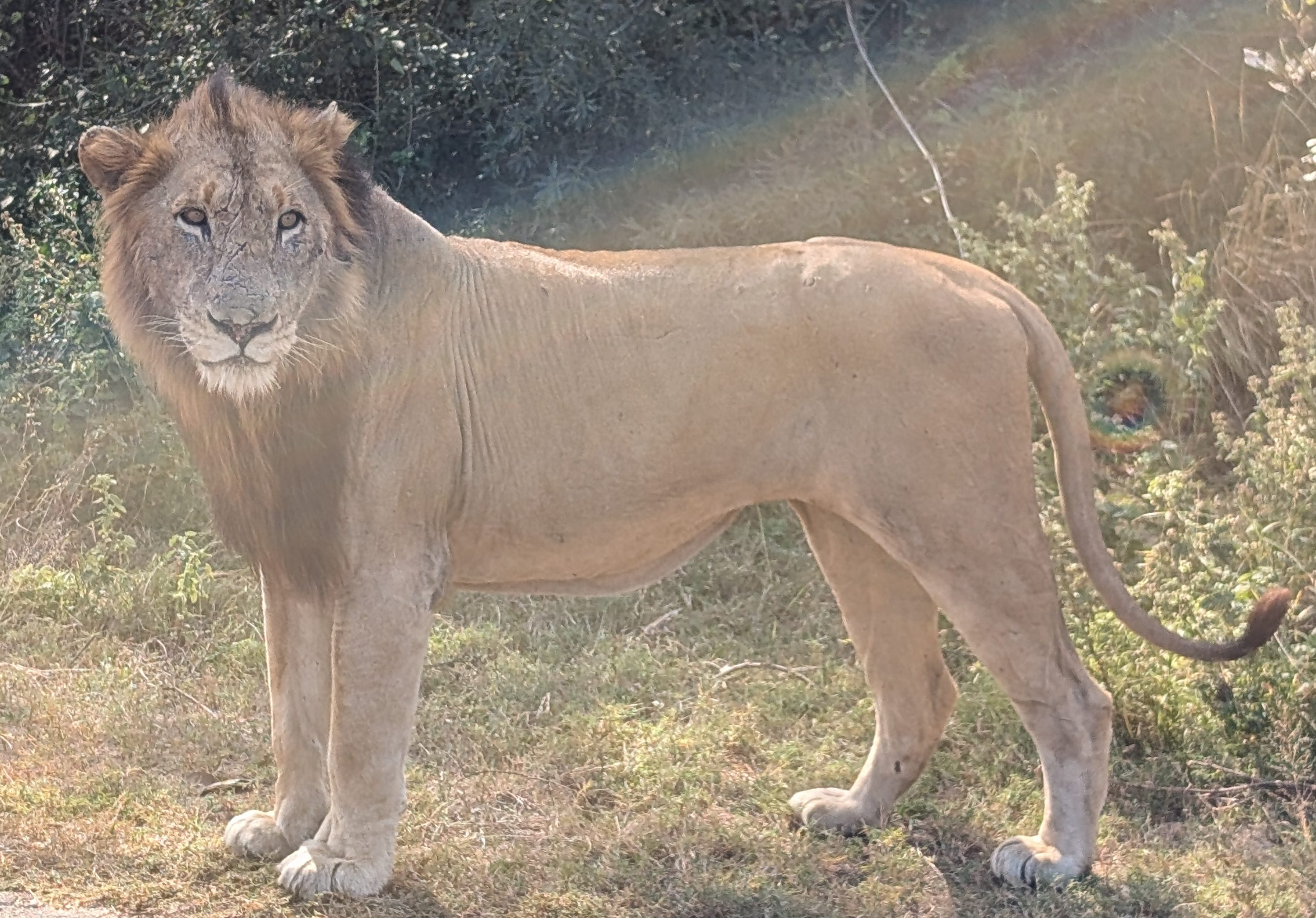
To the next two points, it is true that predation is a quite natural state that long predates humanity. Evolutionarily speaking, it is a well-adaptive strategy to harvest your energy from another being that has put in the work to process it in basically any environmental context. And of course, my physiology requires me to consume calories from another organism to survive, and as an ape, I have evolutionary adaptations that make me adept at harvesting those calories from other animals in addition to plants, and other branches of the Tree of Life. If you look across the animal kingdom, there are actually few animals that will outright refuse meat or even predation. While adaptions for predation are not predominant, opportunistic predation at least is the norm. So why should humans concern themselves with a disdain for predation that wouldn’t even cross the mind of a mule deer? I can’t rightly answer that question, but I can say that I am concerned with the effects of my predation. Simply speaking there is not greater philosophy on this point; I merely perceive a discomfort with the thought that animals were slaughtered for my supper. Perhaps this unique ethical dilemma is because humans are comparatively more reflexive than other animals, and possess a capacity to empathize with animals belonging to other species, to varying degrees. Frankly the why is beside the point; I simply report that I feel discomfort with predation, despite its rich evolutionary heritage.
To address the point of need, for most humans, a vegetarian diet is perfectly healthy if properly balanced (e.g. any diet constituted mostly by potato chips will be unhealthy). Not only that, but most robust evidence suggests that the elimination of most or all red meats is a good way to help stave off cardiovascular disease. So to eliminate the final excuse I previously mustered, I need to eat, but I do not need to eat other animals, I merely want to eat other animals. I am in a position and a society in which it is perfectly feasible to eat a vegetarian diet, but for nearly thirty years, I chose not to and instead to live with the pangs of discomfort it caused.
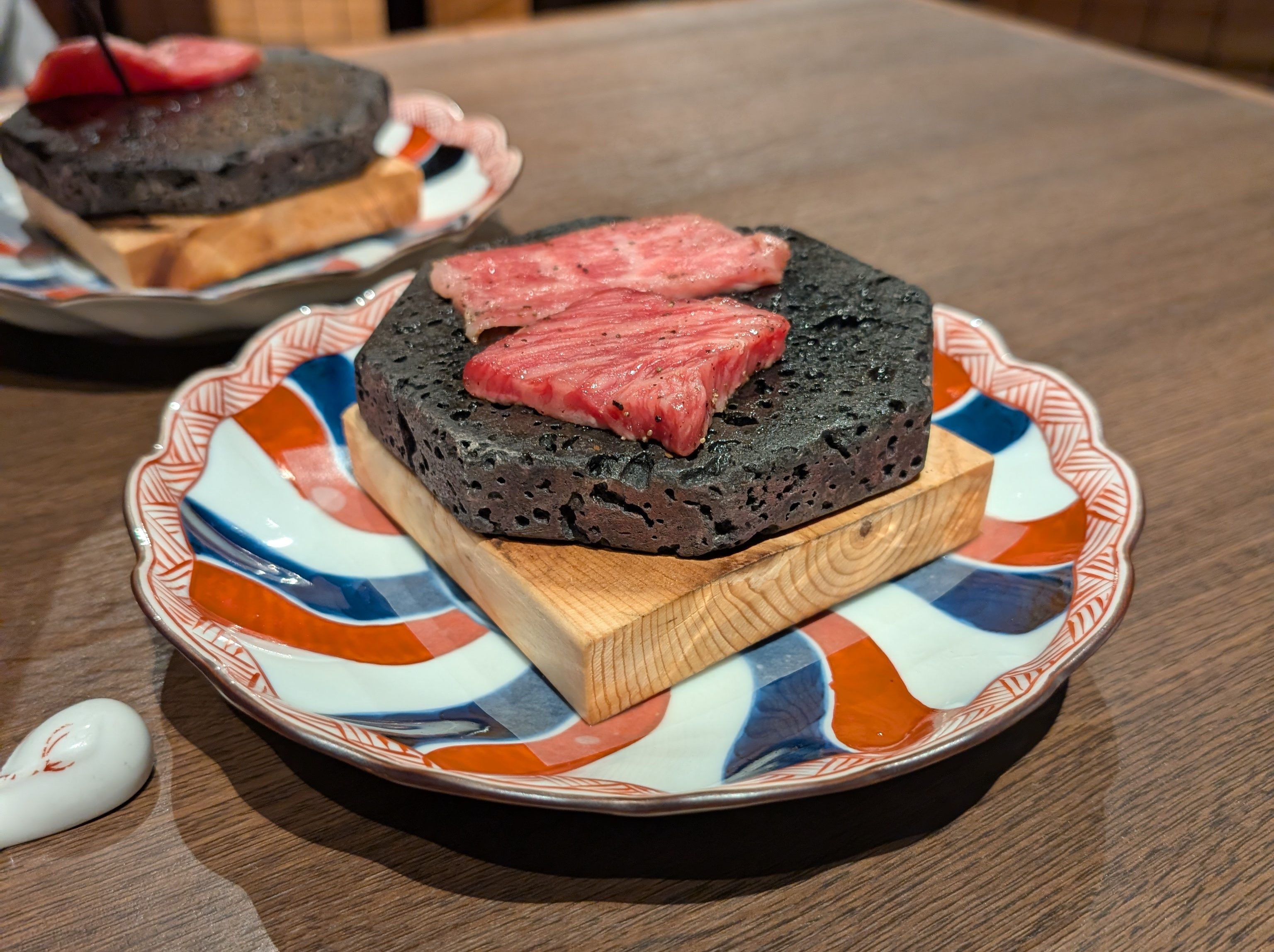
Wallace’s essay allowed me to locate the specific placement of my ethical dilemma. It wasn’t just that I was uncomfortable with predation, it was that it did not outweigh the value that I received from aesthetics alone. This is not to say that I do not value the aesthetics of food with meat. In fact, so of the meals that I find to have the highest aesthetics in my life have showcased animal flesh, such as the multi-course meal I enjoyed at a traditional Hakone Shinkansen, which included a stone-cooked Wagyu strip following expertly prepared and plated sashimi and other seafood delights.
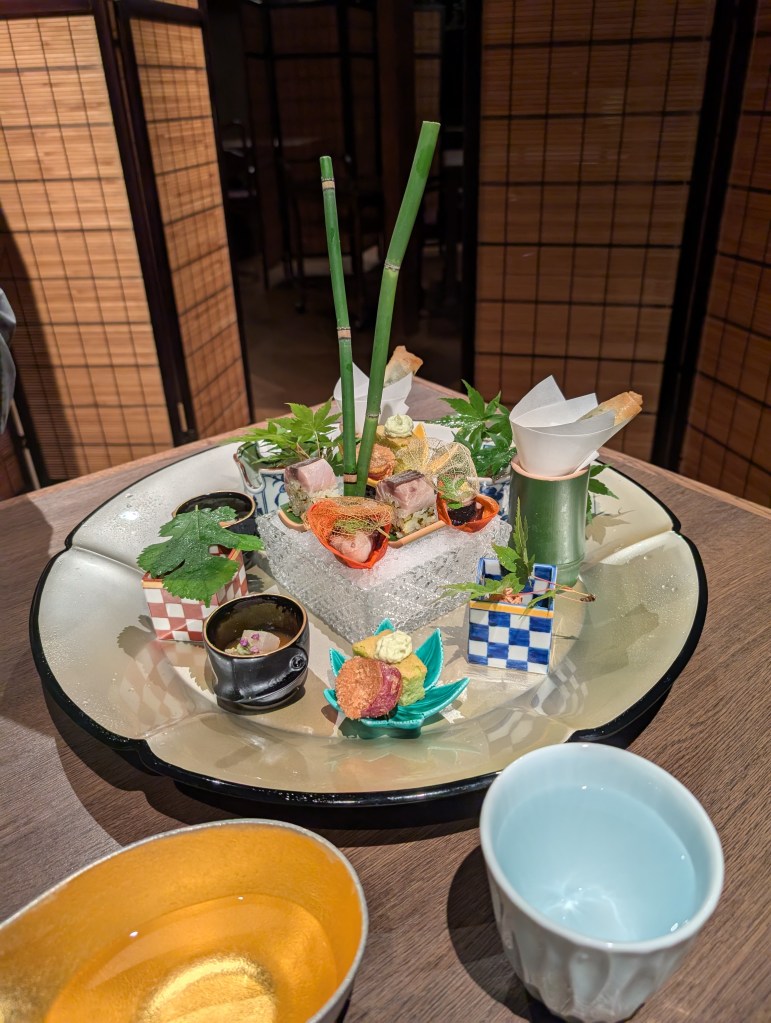
I am not sure I will ever again have a meal this aesthetically beautiful. But with my current thinking, I do not personally value the aesthetics of a meal like this against the cost of suffering, if we are considering aesthetics alone.
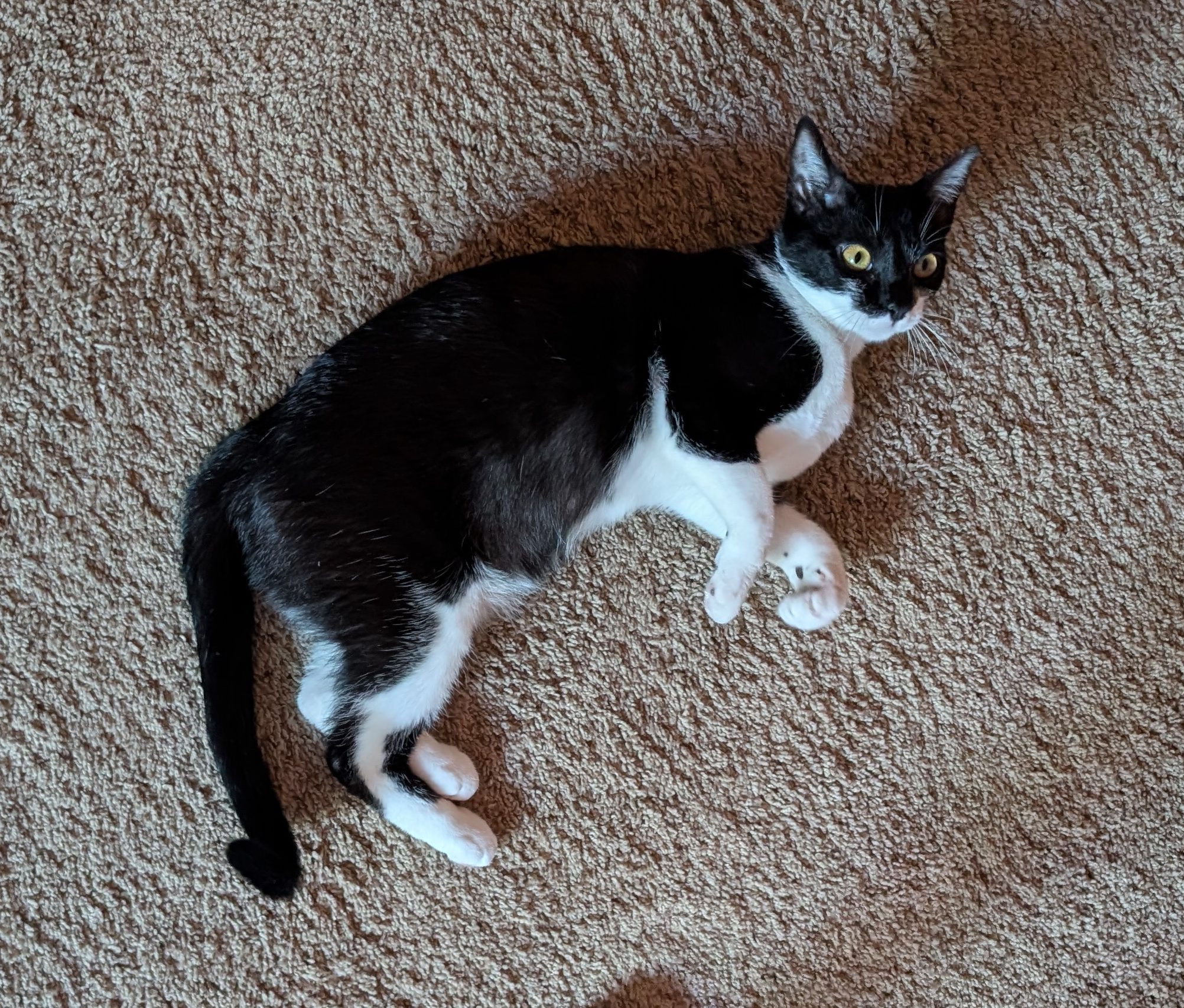
So when would aesthetics not be considered alone? Well the most obvious case is genuine need. To address a trite hypothetical, if I were stranded in the wilderness with no other reasonable options, I would easily evaluate my survival more highly than my discomfort with predation. The point is that for me there is consistently an evaluative component, and the ethical dilemma is primarily manifest when the chief value of meat consumption is aesthetic in nature. I thus feel little discomfort in entreating Donut’s obligate carnivorous diet with pre-packaged cat food. Again, this comes from need, let alone it is the habit of another being and not my own ethical dilemma.
On that topic, I don’t really think I am a “preachy” vegetarian, that kind which tends to make people annoyed with the category. As I have said ad nauseam, this is a personal ethical dilemma that is rooted in a discomfort with my own behaviors. While I might, for instance, pass judgment on particularly bristling behaviors of others, such as the wanton consumption of endangered species that risks their extinction, I do not generally judge others for continuing to eat meat.
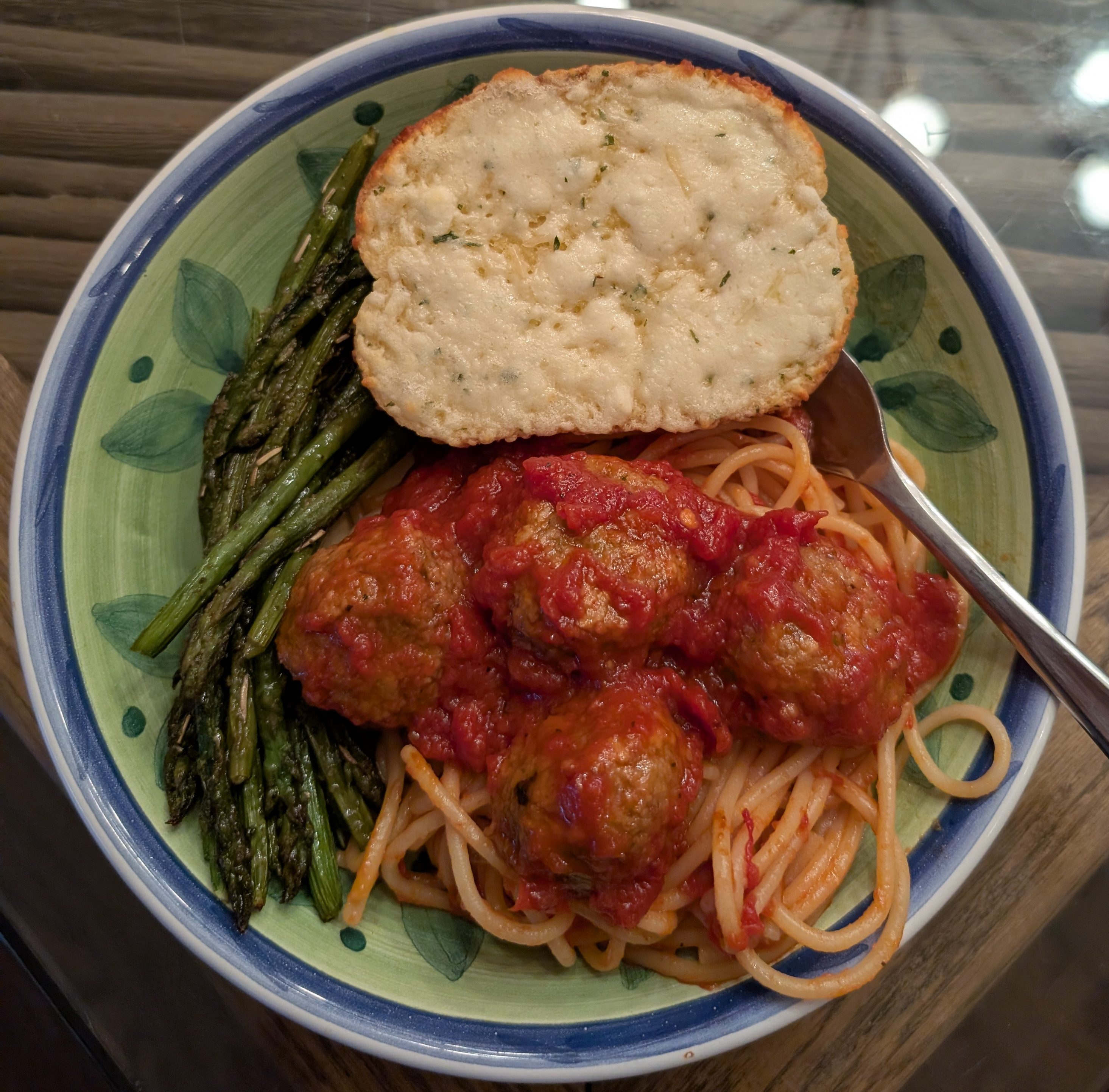
But that said, I am fine tolerating jabs from others for my dietary choices. I have been told, for instance, that my enjoyment of common meat substitutes constitutes a kind of dietary onanism, as it implies that I genuinely enjoy meat. Fair enough, but my retort is that Impossible meatballs taste quite good. I count myself fortunate that I live in a time and place where I can enjoy good aesthetics in vegetarian dishes, given my genuine hatred for boiled summer squash. I was also told by some in South Africa that I really ought to eat meat as all men should eat meat. I’m going to choose not to unpack that one in this post, but suffice to say this diet is my personal choice for which I am fully comfortable and I am fine with a friendly jab or two.
But this brings me to another point: there are other non-aesthetic reasons I would eat meat barring desperation. For instance, I recently joined my mentor, Spiro Kiousis, at a celebratory dinner in his honor. I did not select the restaurant, which had a prix fixe menu including meat dishes. That said, I did not complain and I ate my meat. As I told Spiro at the time, it really wasn’t a problem because it was his moment. In my mind, the consumption was not merely for my aesthetic tastes, but it was to help maintain a social relationship which I deeply value. In the end, I find the specific dilemma presented by Wallace to be valuable because it puts to words a set of feelings I have long had and created various inconsistencies. I am more than happy to cut out meat when it is for purely aesthetic purposes, but I am also capable of reintroducing it when presented with potential physical or social discomfort.
The point of this post is to outline a personal ethical dilemma and to invite thought on it, in addition to an invitation to read a rather well-written food and travel essay by David Foster Wallace. I don’t expect you to feel the same, or to convert you to my particular brand of a vegetarian diet, and I expect that my own thoughts may change over time. But for now, I am feeling better about myself and I feel more consistently in harmony sharing the planet with all other kinds of life, big and small.
 Dr. Josh T. L. Anderson Personal Site
Leave a comment